20 states challenge the Ed. Dept.'s shifts in an expanded lawsuit.
A SUBSCRIBER-ONLY GUIDE TO K-12 POLITICS & POLICY — December 5, 2025
Education Week
Politics K-12
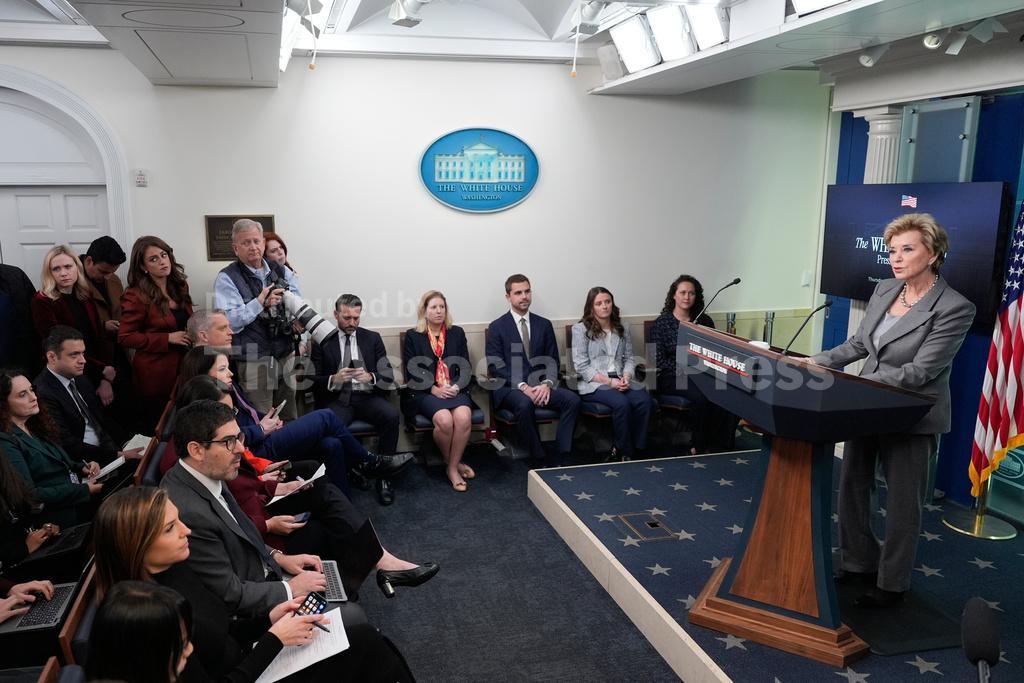
Education Secretary Linda McMahon speaks with reporters at the White House on Nov. 20, 2025, about shifting U.S. Department of Education programs to other agencies. Those moves now face a legal challenge. — Alex Brandon/AP
Happy Friday, and welcome back to Politics K-12, a newsletter just for EdWeek subscribers with the education policy and political news of the week. I’m Assistant Managing Editor Matt Stone filling in for Madeline Will.  

This week, we have the latest for you on the U.S. Department of Education’s move of most K-12 programs to other agencies, two large states’ changes to their social studies standards, the coming end of federal funding for school mental health initiatives, and more. Read on. 
Matthew Stone
Editor
What You Need to Know
The Ed. Dept. Meets Resistance as It Moves Programs to Other Agencies 

It’s been more than two weeks since the Department of Education announced it would send core programs to the Department of Labor and three other federal agencies.  

While President Donald Trump has his sights set on eliminating the 45-year-old Education Department, U.S. Secretary of Education Linda McMahon acknowledges that can’t happen without Congress. McMahon has described the interdepartmental moves as a “proof of concept” to show Congress that they can work long-term. 

But 20 states and the District of Columbia argue in a newly amended lawsuit that the interagency shifts exceed the president’s authority. Federal laws require that the U.S. Department of Education operate its own programs, the Democratic attorneys general argue. 

The states added their challenge of the interdepartmental shifts to a lawsuit they filed in March in response to mass layoffs at the Education Department. The suit resulted in a temporary pause of the layoffs before the U.S. Supreme Court ultimately allowed them. 

Will the newest legal challenge slow down the Trump administration’s latest attempt to shrink the Education Department? 

Communism, American Exceptionalism Become Flashpoints in History Standards  

Battles over what children should learn in history class are alive and well as two large states revise and add to their social studies standards

Texas is at the start of a periodic process to rework its standards for the subject, and its state board of education has already adopted a framework to guide it that critics argue overemphasizes Texas history. It also changes the sequence for when students learn about different topics. 

The state board is leaning on social studies content advisers who favor teaching that the United States was founded as a Christian nation or have pushed for district curriculum overhauls that scrub references to diversity. 

“We have kids that are questioning the incredible blessings that have come through the capitalist markets,” said Mandy Drogin of the Texas Public Policy Foundation, which advocated for the 2025 framework. “That was the impetus for us to start advocating for something better.” 

And in Florida, the state board of education recently approved an addition to its social studies standards focused on communism. The standards instruct educators to teach about the “repackaging of Marxist ideology” in current political discourse, and the “dangers of propaganda” in modern media. Historians have said they present a skewed picture and minimize the consequences of McCarthyism. 

The revisions in these two states could have implications elsewhere, as they’re some of the nation’s largest textbook markets. 

Mental Health Projects Wind Down After Trump Pulls the Plug 

It’s been a roller coaster year for school districts, state education departments, and universities that received federal grants in recent years to hire and train mental health professionals to work in schools. 

Most received surprise notices in April—for many, just months into their five-year projects—saying their funding reflected Biden administration priorities and would end at the close of 2025. Grantees scrambled to preserve their funding, appealing to the Department of Education to reconsider, reaching out to members of Congress, and filing lawsuits. 

So far, a court order has temporarily preserved funding for 49 of the 223 grantees on the chopping block. But that leaves 174 initiatives across the country that allowed schools to hire more counselors, clinicians, and others to work with students facing the end of their funding in just a few weeks. Initiatives to train future mental health professionals to work in schools are also running out of money years ahead of schedule. 

“There are certainly questions about whether this has destabilized the school mental health workforce pipeline,” said Sharon Hoover, a former co-director of the National Center for School Mental Health. 

The Department of Education says it plans to redistribute the funding from the terminated grants by the end of the year. But the agency’s redesigned grant competition carries a narrower focus, supporting initiatives to hire and train school psychologists only instead of a full range of mental health professionals. 
Featured Story of the Week
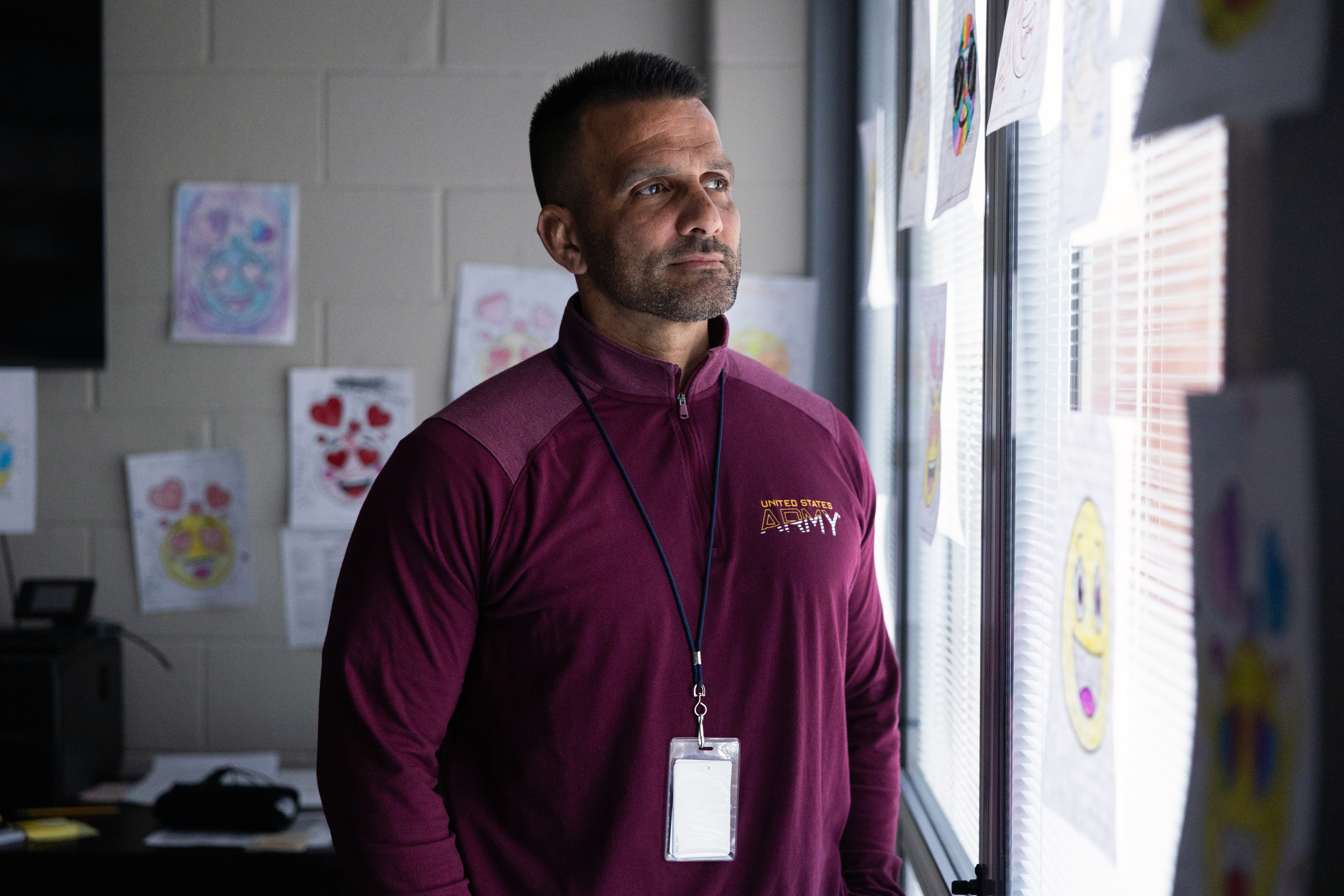
Andrew Doster, superintendent of the Morrisville school district in Morrisville, Pa., stands in his office on Nov. 13, 2025. Doster told staff in early November the district's schools would have to close by the end of January if state lawmakers couldn't agree on a budget. — Rachel Wisniewski for Education Week


In early November, Superintendent Andy Doster alerted staff in Pennsylvania’s Morrisville school district that the system’s financial situation had grown so dire that schools would have to close their doors in January—halfway through the school year. 

A monthslong state budget impasse was to blame. State lawmakers had blown past their July 1 deadline for passing a budget for the sixth time in a decade, this time by more than four months. With no budget in place, school districts weren’t receiving state payments, and they couldn’t access federal funds earmarked for them. 

Nine days after Doster announced schools would have to close, lawmakers reached a deal and Gov. Josh Shapiro signed it into law. 

Crisis averted, right? Not so fast. 

What We're Keeping an Eye On
1. On our minds. As the Trump administration starts new immigration enforcement operations in Minnesota and New Orleans, students stand to be affected, even if ICE agents don’t make arrests or carry out raids on school grounds. Schools this year have reported increased fear, anxiety, and student absences as immigration arrest campaigns have taken place locally. A handful of new studies and a recent survey by the EdWeek Research Center have corroborated those effects, as well as effects on academic performance
2. On the map. In Georgia, a committee of state lawmakers is recommending that chronically absent students be prohibited from participating in school athletics and that their driver’s licenses be temporarily revoked. In California, about 3,000 teachers and other staff in the West Contra Costa Unified school district went on strike Thursday. It’s at least the eighth strike or walkout of school employees this academic year, according to a tracker maintained by Cornell University’s school of industrial and labor relations.
3. On our calendar. Tune in for an afternoon focused on strategies to support struggling middle and high school readers, part of EdWeek’s K-12 Essentials Forum series, on Thursday, Dec. 11 from 2-4 p.m. Eastern. The same day, from 2-3 p.m. Eastern, the Learning Policy Institute hosts a webinar on navigating federal shifts in education funding
Recommended Reading
Here's what else is happening in education news.
We Want to Hear From You
What did you think of this week's issue?
I learned something!
It was just OK.
Not worth my time.
Thanks for reading! Drop me a note at [email protected] with any feedback on what you read today. 

You can also send tips and thoughts to my colleagues: Mark Lieberman at [email protected] for school funding and U.S. Department of Education news and Sarah Schwartz at [email protected] for tips on curriculum standards. Maddy will be back next week. 

--Matt 
This newsletter is exclusively for Education Week subscribers. Did someone forward this email to you? You can subscribe here to receive your own copy.

View in Browser  |  Advertise

Want to stop receiving this newsletter? Update your preferences or unsubscribe from this list.

Copyright © 2025 Education Week
6935 Arlington Road, Suite 100, Bethesda, MD 20814
Got feedback? Reply to this email.